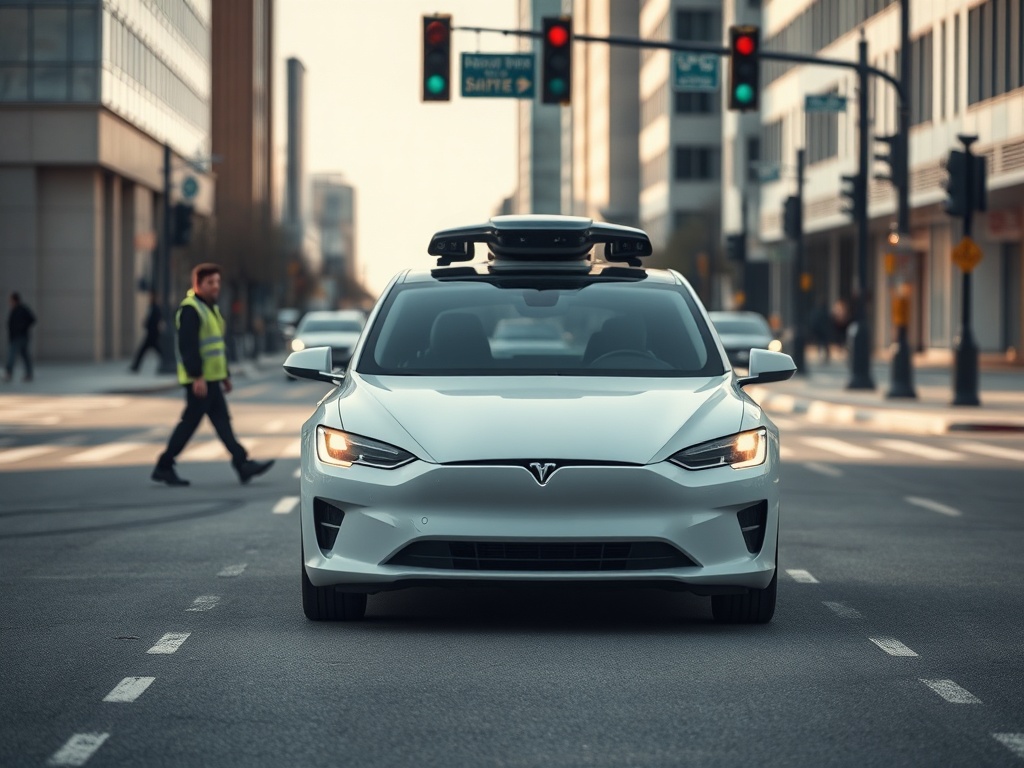
When a self-driving car crashes, the question isn’t just who caused the accident — it’s who should pay the price when a robot behind the wheel fails. As autonomous vehicles edge closer to mainstream roads, a new frontier of legal battles is emerging, challenging traditional notions of liability and forcing courts, manufacturers, and insurers to rethink accountability in a world where humans aren’t always in control.
“Liability frameworks are fundamentally reshaping—shifting the burden from traditional driver negligence to complex product liability claims against manufacturers and developers, holding AV makers accountable for hardware defects and AI decision errors without requiring proof of negligence.”
Self-Driving Car Crashes: Who Pays When Robots Fail? Emerging Liability Battles
The rise of autonomous vehicles (AVs) is revolutionizing transportation, promising safer roads and greater mobility. Yet, as self-driving cars increasingly share public streets, a critical question emerges: when these sophisticated machines fail and cause crashes, who bears the financial and legal responsibility? Traditional liability models—centered on driver negligence—are being disrupted by complex product liability claims targeting manufacturers, software developers, and other stakeholders in the AV ecosystem.
This shift in accountability reflects the intricate hardware and software systems governing AV operations. Courts are navigating uncharted legal territory, often applying strict liability standards that hold manufacturers responsible for defects without requiring proof of negligence. At the same time, human drivers retain some liability in semi-autonomous vehicles, creating a layered framework of shared responsibility.
Adding to the complexity, emerging concerns about cybersecurity vulnerabilities and third-party involvement further blur the lines of liability. High-profile cases and varying state regulations highlight the evolving legal landscape, prompting experts to advocate for new liability models tailored to the unique nature of autonomous technology. Understanding these emerging liability battles is essential as society adapts to a future where robots—not humans—may increasingly control the wheel.
The Shift in Liability Frameworks
As AV technology matures, liability frameworks are fundamentally reshaping, shifting the burden from traditional driver negligence to intricate product liability claims against manufacturers and developers. Courts are increasingly applying strict liability standards, holding AV makers accountable for hardware defects—such as malfunctioning sensors—and software failures, including errors in AI decision-making. Plaintiffs now rely on detailed sensor data, diagnostic logs, and engineering evidence to establish causation, marking a departure from faulting the human operator.
However, in semi-autonomous vehicles (SAE Levels 2-3), human drivers and owners remain partially liable for monitoring, intervention, and maintenance, reflecting a nuanced shared responsibility model. Meanwhile, emerging legal debates focus on third parties—software developers, cybersecurity firms, and component suppliers—whose vulnerabilities or breaches could contribute to accidents, though this area remains legally unsettled.
High-profile verdicts, such as the 2025 Tesla case assigning significant manufacturer liability, are setting influential precedents that challenge the industry to enhance transparency and safety. Yet, regulatory fragmentation across states complicates liability determinations, as manufacturers and insurers navigate varying laws and guidelines. Experts increasingly call for evolving standards that treat AVs as “computer drivers,” balancing victim compensation with incentives for technological innovation. Together, these developments signal an ongoing legal evolution where technological accountability is paramount as self-driving cars integrate into everyday traffic.
Responsibilities of Stakeholders
Manufacturers
This transformation of traditional liability paradigms requires manufacturers to prioritize rigorous hardware and software quality controls, transparency in AI decision-making processes, and proactive cybersecurity measures to mitigate risks and legal exposure.
Consumers and Owners
For consumers and owners, understanding shared responsibility—especially in semi-autonomous vehicles—is critical, underscoring the importance of proper vehicle maintenance and timely software updates.
Insurers and Legal Professionals
Meanwhile, insurers and legal professionals must navigate a fragmented regulatory landscape, adapting policies and litigation strategies to diverse state laws and emerging precedents.
Looking Ahead
- Evolving legal standards, such as conceptualizing AVs as “computer drivers” subject to strict liability, offer promising frameworks to balance victim compensation with innovation incentives.
- High-profile cases continue to set influential benchmarks, reinforcing the need for clear liability rules that foster public trust and accountability in this rapidly advancing technology.
- A collaborative approach among manufacturers, regulators, legal experts, and consumers will be essential to address complex liability challenges and ensure safer roads for all.
As self-driving car crashes rise, legal battles heat up over who bears the cost when autonomous tech fails.